
Learning an instrument can feel like a very personal process. You spend time practicing scales, working through difficult passages, and trying to turn individual notes into music. Private instruction is often valuable for building technique, but group music lessons add something that individual practice cannot fully recreate: the experience of making music with other people.
In group music lessons, students learn to listen, react, keep time, communicate, and become comfortable playing while other musicians are doing something different. Those are practical musical skills. They matter whether a student hopes to join a school ensemble, play in a band, perform at an open mic, or simply enjoy making music with friends.
For children, teenagers, and adults, learning in a group can also make music feel more social and connected. A class becomes a place to develop musical ability while seeing how other students approach the same challenges.
Learning Rhythm in a Real Musical Setting

A metronome is a useful practice tool, but playing with other musicians creates a different kind of rhythmic responsibility.
If one student speeds up or slows down, the rest of the group feels it. If someone enters too early, the mistake affects the arrangement. These moments give rhythm a practical meaning that can be difficult to understand through exercises alone.
Group music lessons allow students to experience pulse and timing as shared responsibilities. Instead of thinking only about counting measures, students begin to feel how their part fits into a larger groove.
This is especially helpful for musicians who eventually want to play in bands or ensembles. Good group playing depends on musicians who can maintain their own part while staying connected to the rhythm around them.
Group Lessons Can Help Build Musical Confidence
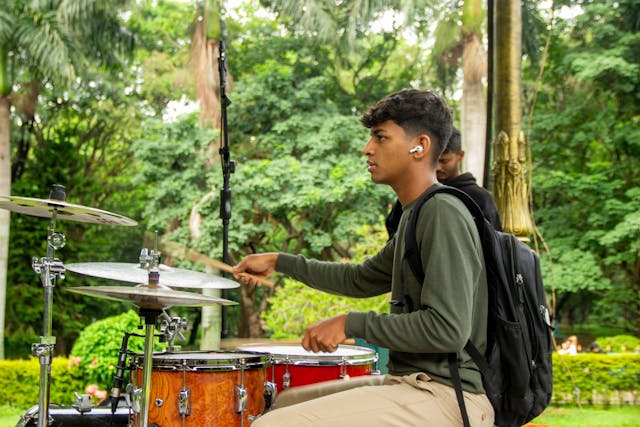
Playing in front of other people can be uncomfortable at first. Many students practice successfully at home and then become nervous the moment someone else is listening.
Group music lessons create regular opportunities to play in a supportive environment. Students become accustomed to making small mistakes, recovering, and continuing with the music.
That experience matters.
In a real performance, musicians cannot always stop and restart a song. Learning to continue after a missed note or awkward transition is part of becoming a more confident player.
A group setting can make this process feel less intimidating because every student is learning. Students see that mistakes are normal, and they also see how other musicians solve problems.
Learning From Other Music Students

A good music teacher provides direction, correction, and experience. In a group class, students also gain the opportunity to observe their peers.
One student may use a fingering that makes a passage easier. Another may ask a question that several people were thinking but did not know how to explain. A student who understands a rhythm quickly may help demonstrate it for the class.
This does not replace the teacher. Instead, it adds more examples to the learning environment.
Group music lessons can be especially useful when students are working at similar levels. They can see that other musicians face many of the same challenges, and they can compare different approaches to practice and performance.
The result is a learning experience that feels active rather than isolated.
Why Group Music Lessons Can Improve Communication

Musicians communicate constantly, even when they are not speaking.
A head nod can signal the beginning of a song. Eye contact can help musicians prepare for a transition. A drummer may change dynamics to support a quieter section. A guitarist might leave more space when a vocalist begins singing.
These habits develop through experience.
During group music lessons, students learn to watch, listen, and respond. Teachers can point out moments where communication breaks down and help students understand how stronger awareness improves the music.
Verbal communication matters too. Students may need to explain which section feels difficult, ask the group to try a slower tempo, or discuss how a song should end.
Learning to talk about music clearly is an important skill for anyone who hopes to rehearse or perform with other musicians.
A Regular Music Group Can Create Accountability

Practicing alone requires self-discipline. It is easy to postpone a difficult song or tell yourself that you will work on a technique tomorrow.
A group creates a shared schedule.
When students know that the class will play a particular song at the next session, practice has a clearer purpose. Your preparation affects more than your own progress. Other musicians are expecting you to know your part.
Group music lessons can provide helpful motivation for students who struggle to maintain a practice routine. The goal is not pressure or embarrassment. The goal is to create a reason to return to the instrument during the week.
Regular classes also give students milestones. A chord progression that felt impossible a month ago may suddenly feel comfortable when the group plays it again.
Group Music Lessons and Private Music Lessons Serve Different Purposes
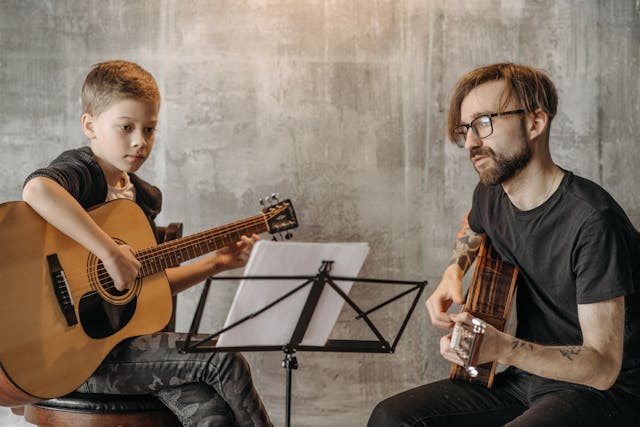
Group instruction and private instruction should not always be viewed as competitors. They can develop different parts of a musician.
Private lessons give a teacher more time to focus on one student’s technique, practice habits, musical goals, and specific challenges. A teacher can slow down, change the lesson plan, and concentrate on details that may only apply to that student.
Group music lessons focus more heavily on interaction. Students learn how to maintain a part, listen across an ensemble, communicate, and adjust to other musicians.
For many students, a combination of both approaches can be valuable. Individual instruction helps build the skills needed to play an instrument, while group experience teaches students how to use those skills with other people.
The right choice depends on the student’s goals. Someone preparing for a specialized audition may need focused private instruction. A student who wants to become more comfortable playing with others may benefit from a group environment.
Are Group Music Lessons Good for Beginners?
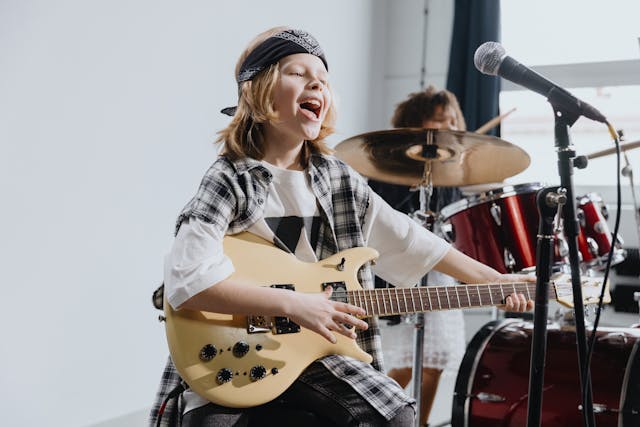
Beginners sometimes worry that they need to become skilled musicians before they can play with other people. In reality, the right beginner group is designed around students who are still learning foundational skills.
The important factor is placement.
A new musician should not be expected to keep up with advanced performers. Likewise, experienced students may become frustrated in a class that spends most of its time reviewing basic material.
Well-structured group music lessons should consider experience level, age, instrument, and the goals of the students.
For beginners, simple music can be extremely effective. A class can work on a few chords, a steady rhythm, or an easy melody and still teach important ensemble skills.
The music does not need to be complicated for students to learn how to play together.
Group Music Lessons for Adults
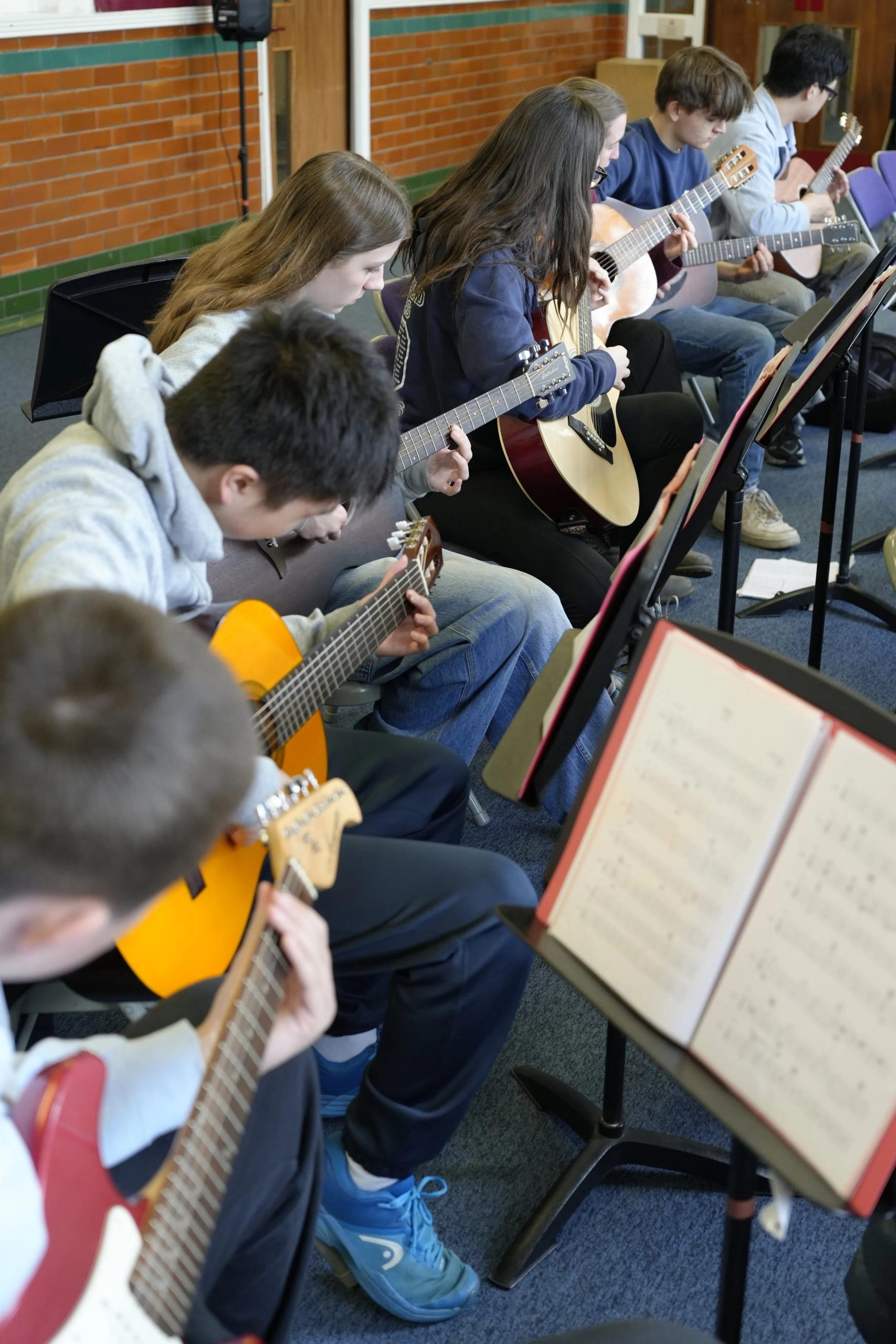
Adults often assume group classes are primarily for children or school-age students. However, adult musicians can benefit from the same collaborative experience.
Some adults are returning to instruments they played years ago. Others are complete beginners. Many simply want a creative activity that gets them away from work and daily responsibilities.
Group music lessons can give adult students a practical reason to keep playing. Instead of practicing without a destination, they are working toward songs and skills that will be used with other musicians.
The social side can also be valuable. Los Angeles is full of musicians, but meeting people at a similar skill level is not always easy. A group class creates a natural environment for making musical connections without the pressure of auditioning for a band.
How to Get the Most From Group Music Lessons
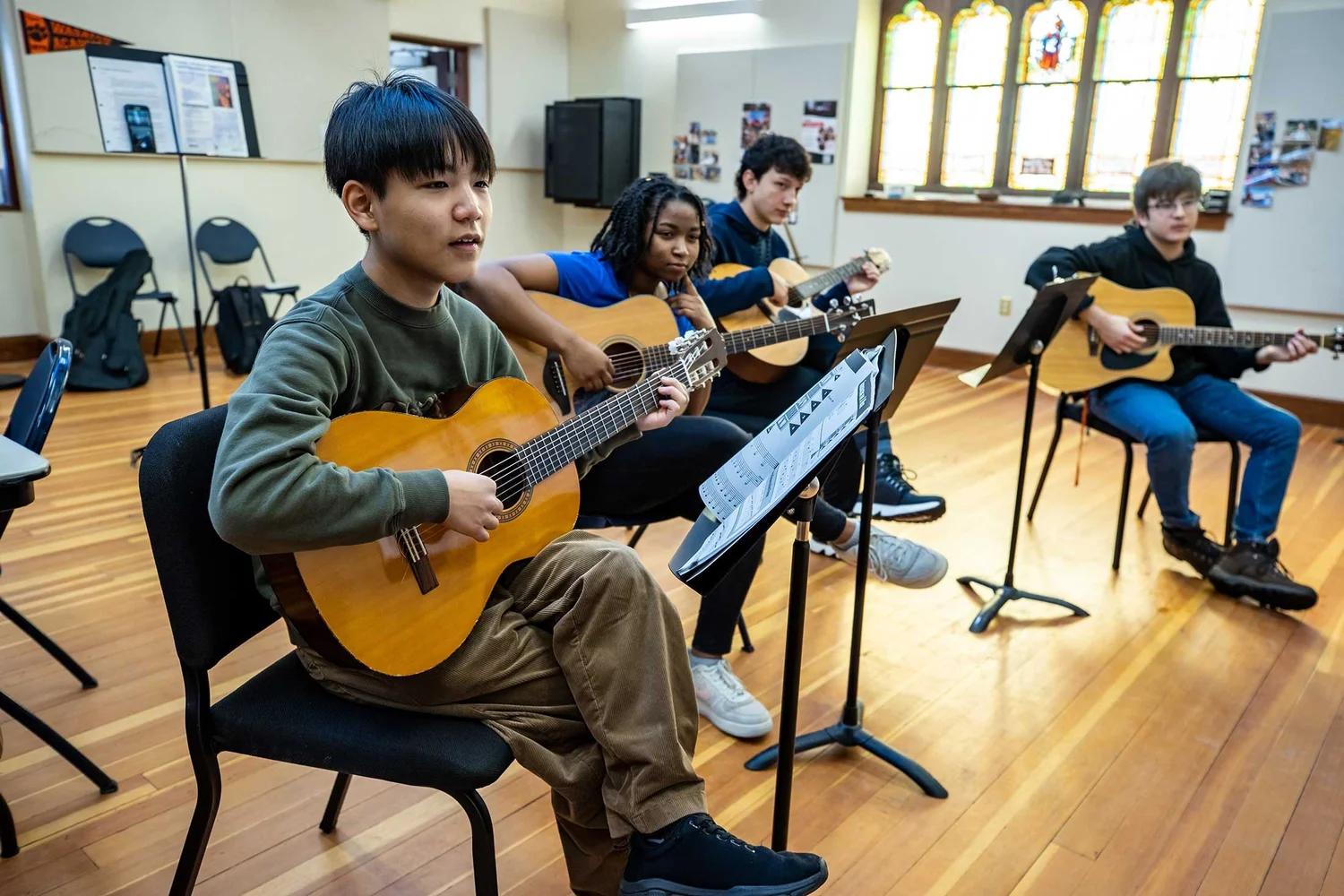
Students get more from a group class when they arrive prepared and ready to listen.
Practice the material assigned by the instructor between sessions. You do not need to play every part perfectly, but familiarity gives the group more time to work on music together.
During class, pay attention even when the teacher is helping someone else. The correction may apply to your playing too.
It is also important to keep playing through small mistakes. Group music is built on continuity. Learning how to recover is often more useful than stopping every time something goes wrong.
Finally, listen to the group as much as you listen to yourself. The goal of group music lessons is not simply to play your individual part in the same room as other people. The goal is to make music together.
Finding Group Music Lessons in Los Angeles
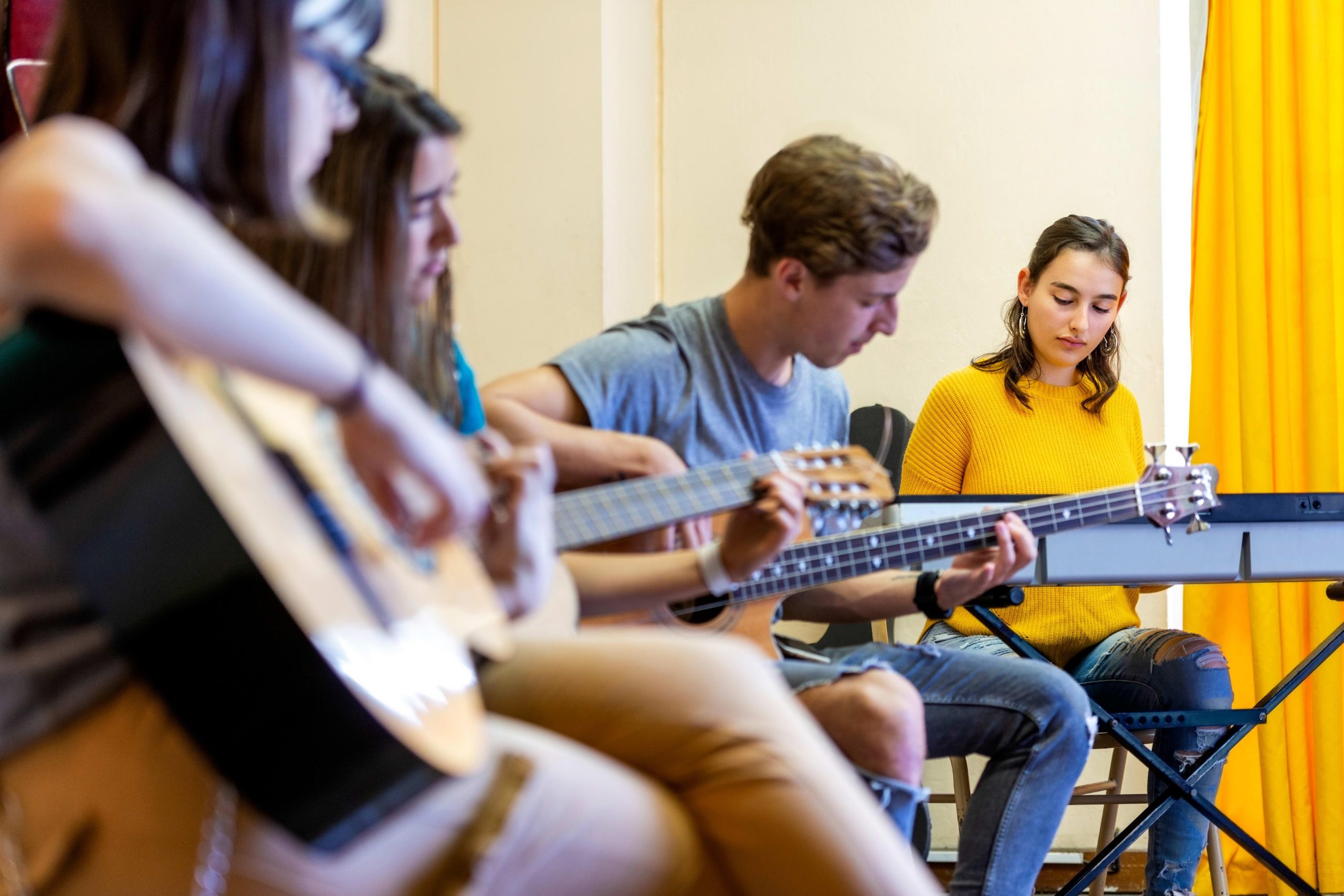
Los Angeles offers no shortage of musicians, but the right learning environment should still match your experience and goals.
Before joining a class, find out what instrument or style the group focuses on and whether the class is intended for beginners, intermediate students, or more experienced players. It is also worth asking how the instructor balances individual questions with group playing.
Location and scheduling matter as well. A class that is difficult to reach consistently will be harder to maintain, especially in Los Angeles traffic.
Most importantly, look for an environment where students feel comfortable asking questions and playing imperfectly while they learn. Progress requires experimentation. A supportive instructor can keep the class moving while making sure students understand what they are working toward.
The best group music lessons in Los Angeles should give students a reason to practice, opportunities to play with others, and guidance from a teacher who understands how to keep musicians learning together.
Looking for Group Music Lessons in Los Angeles?
Music is meant to be played, heard, and shared. Private practice remains important, but playing with other musicians can reveal skills that are difficult to develop alone.
Group music lessons give students the opportunity to strengthen rhythm, improve listening, communicate with other players, and become more comfortable making music in front of people. For beginners and experienced musicians alike, the group environment can turn practice into a more connected musical experience.
Adam’s Music has been helping Los Angeles musicians and students since 1989. At its West Los Angeles music store, Adam’s Music offers music lessons alongside instrument rentals, repairs, sales, sheet music, and accessories for musicians at many different stages of their musical development.