Los Angeles is one of the most musically active cities in the world. It has more working musicians, recording studios, and live venues per square mile than almost anywhere else in the country. That environment creates a deep pool of teaching talent, which is good news for anyone looking for private music lessons in LA. The challenge is not finding a teacher. The challenge is finding the right one for where you are and where you want to go.
What Private Lessons Offer That Other Formats Cannot
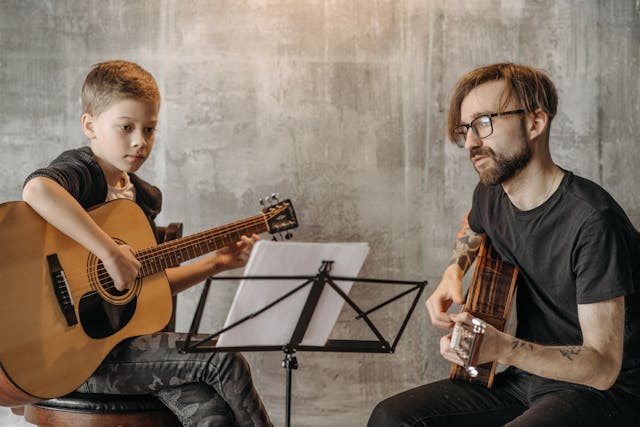
A private lesson puts one student in front of one teacher for the entire session. There is no curriculum built around the average pace of a group. The teacher moves as fast or as slowly as the student needs, addresses the specific technical problems that student has, and builds a lesson plan around that individual’s goals. For a beginner, that means no one in the room is further ahead and making them feel behind. For an intermediate student, it means no time wasted on fundamentals they already have.
Private lessons also create accountability in a way that group formats rarely do. A teacher who sees the same student every week knows exactly what was practiced and what was avoided. That level of direct observation catches bad habits early, before they calcify into problems that take months to undo. For any student who is serious about making real progress, private lessons are the most efficient path available.
What Beginners Should Look for in a Private Teacher

A beginner’s first teacher shapes the entire foundation of their musical development. The most important quality to look for at this stage is not performance credentials but teaching experience with new students. A teacher who has guided dozens of beginners through the early months knows exactly where confusion tends to appear and how to address it before it discourages the student. Ask any prospective teacher directly how many beginners they currently teach and how they structure the first several lessons.
Beginners also benefit from a teacher who connects the technical work to music the student already loves. Learning scales and note names in isolation is dry and abstract. Learning them in the context of a song the student recognizes and wants to play makes the same information meaningful. A good beginner teacher finds that connection early and uses it to keep motivation high through the parts of the learning process that are genuinely difficult.
What Intermediate Students Need from Private Lessons in LA

An intermediate student has cleared the first phase of learning but often hits a plateau where progress feels slow and the path forward is unclear. This is one of the most common reasons students seek out private music lessons in LA after a period of self-teaching or group instruction. The right teacher at this stage identifies exactly where the ceiling is and builds a targeted plan to push through it. Intermediate students should look for a teacher with specific experience in the style or genre they want to develop. A classically trained pianist and a jazz pianist both know the instrument deeply, but their teaching priorities and methods are very different. Matching the teacher’s background to the student’s goals at the intermediate level produces faster and more satisfying results than working with a generalist who covers everything at a surface level.
How to Evaluate a Teacher Before You Commit

Most music teachers and schools offer a trial lesson or an introductory session at a reduced rate. Take it. A trial lesson tells you more about fit and teaching style than any biography or list of credentials ever could. Pay attention to whether the teacher listens as much as they talk, whether they ask about your goals before diving into exercises, and whether the session feels productive or just busy. After the trial, ask yourself whether you felt engaged or passive during the lesson. A strong teacher pulls the student into an active role from the very first session. If you spent most of the time watching the teacher demonstrate without being asked to try things yourself, that is a signal worth taking seriously. The best private lessons in LA are collaborative, not performative.
Lesson Length and Frequency: What Actually Works

The standard private lesson runs 30 or 60 minutes. For children under ten, 30 minutes is usually the right call. Attention spans at that age make a full hour counterproductive in most cases, and a focused 30-minute session with daily home practice produces better results than a longer lesson with less retention. For teens and adults, 60 minutes gives enough time to warm up, work through current material, introduce something new, and close with a clear practice assignment. Weekly lessons are the minimum frequency for consistent progress. Spacing lessons further apart than one week gives bad habits time to settle and makes it harder for a teacher to maintain continuity from session to session. Students who commit to weekly lessons and practice between them consistently outperform students who take bi-weekly lessons at a higher per-session cost.
Making the Most of Every Lesson

The lesson itself is only part of the equation. What happens between lessons determines how fast a student moves. Every private lesson should end with a specific, written practice assignment that covers exactly what to work on and for how long. If a teacher ends a session without giving clear direction for the week, ask for it. Vague instructions like “practice what we covered today” produce vague results. Students at every level also benefit from recording themselves during practice. Listening back reveals problems that feel invisible in the moment, from rushing the tempo to tensing the shoulders, and gives the student something concrete to bring to the next lesson. It is one of the simplest and most underused tools available to any musician working to improve.
Finding Private Music Lessons in LA at Adam’s Music
Adam’s Music on Pico Boulevard in West Los Angeles offers private music lessons in LA across a range of instruments and experience levels. The faculty includes teachers with backgrounds in performance, education, and studio work, giving students access to instructors who match their specific goals rather than a one-size-fits-all curriculum. Whether you are picking up an instrument for the first time or working through a plateau you have been stuck on for a while, Adam’s Music has the right teacher for where you are. Stop by the shop or reach out today to get matched with an instructor and schedule your first lesson.